Unit 6: Biochemistry of Hormones
Hormone classification, mechanisms of action, second messengers (cAMP, IP3/DAG), steroid hormones, thyroid hormones and insulin signalling.
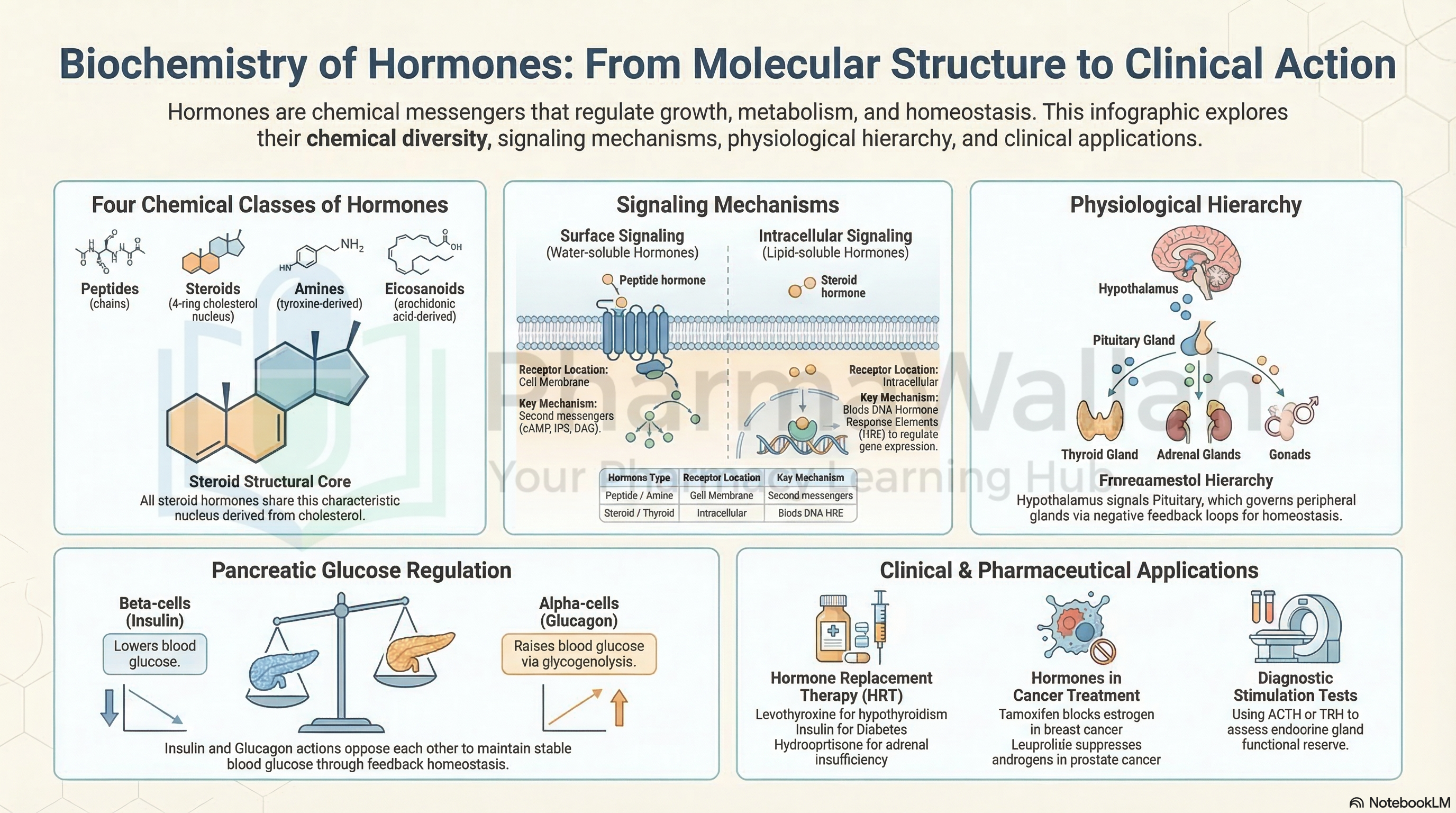
Unit 6: Biochemistry of Hormones
Introduction to Hormones
Hormones are chemical messengers synthesized and secreted by specialized glands or cells, transported through the bloodstream to target organs, where they bind to specific receptors and elicit physiological responses. They regulate a wide range of processes including growth, development, metabolism, reproduction, and homeostasis.
Historical Perspective:
- The term "hormone" (from Greek "hormon" meaning "to set in motion") was coined by Ernest Starling in 1905.
- Early discoveries: Secretin (first hormone identified, 1902), insulin (1921), thyroid hormones, steroid hormones.
General Characteristics of Hormones:
| Property | Description |
|---|---|
| Specificity | Hormones act only on cells with specific receptors |
| Potency | Effective at very low concentrations (picomolar to nanomolar) |
| Half-life | Varies from seconds (peptide hormones) to days (thyroid hormones) |
| Regulation | Usually controlled by feedback mechanisms (negative feedback predominates) |
| Integration | Hormones interact in complex networks (endocrine axes) |
1. Chemical Classification of Hormones
Hormones are classified based on their chemical structure, which influences their synthesis, storage, secretion, transport, mechanism of action, and half-life.
1.1 Peptide/Protein Hormones
| Property | Characteristics |
|---|---|
| Structure | Chains of amino acids (small peptides to large glycoproteins) |
| Synthesis | Ribosomal synthesis as preprohormones → processed to prohormones → active hormone |
| Storage | Stored in secretory vesicles |
| Secretion | Exocytosis (regulated by calcium and cAMP) |
| Transport | Dissolved in plasma (water-soluble) |
| Half-life | Short (minutes) |
| Receptor location | Cell membrane (cell surface receptors) |
| Second messengers | cAMP, IP₃/DAG, calcium, tyrosine kinase |
Examples:
| Hormone | Amino Acids | Source | Major Actions |
|---|---|---|---|
| Insulin | 51 (two chains) | Pancreatic β-cells | Glucose uptake, glycogen synthesis, lipogenesis |
| Glucagon | 29 | Pancreatic α-cells | Glycogenolysis, gluconeogenesis |
| Growth hormone (GH) | 191 | Anterior pituitary | Growth, protein synthesis, lipolysis |
| Prolactin | 199 | Anterior pituitary | Lactation |
| Adrenocorticotropic hormone (ACTH) | 39 | Anterior pituitary | Stimulates cortisol release |
| Thyroid-stimulating hormone (TSH) | Glycoprotein (α,β) | Anterior pituitary | Stimulates thyroid hormone synthesis |
| Follicle-stimulating hormone (FSH) | Glycoprotein | Anterior pituitary | Gametogenesis, follicular development |
| Luteinizing hormone (LH) | Glycoprotein | Anterior pituitary | Ovulation, testosterone synthesis |
| Parathyroid hormone (PTH) | 84 | Parathyroid glands | Increases blood calcium |
| Oxytocin | 9 | Posterior pituitary | Uterine contraction, milk ejection |
| Vasopressin (ADH) | 9 | Posterior pituitary | Water reabsorption (kidney) |
| Somatostatin | 14 | Hypothalamus, pancreatic δ-cells | Inhibits GH, TSH, insulin, glucagon |
1.2 Steroid Hormones
| Property | Characteristics |
|---|---|
| Structure | Derived from cholesterol (cyclopentanoperhydrophenanthrene ring) |
| Synthesis | Enzymatic modifications of cholesterol in mitochondria and ER |
| Storage | Not stored; synthesized on demand |
| Secretion | Simple diffusion (lipid-soluble) |
| Transport | Bound to carrier proteins (albumin, specific binding globulins) |
| Half-life | Long (hours to days) |
| Receptor location | Intracellular (cytoplasmic or nuclear receptors) |
| Mechanism | Hormone-receptor complex binds DNA, regulates gene transcription |
Classes of Steroid Hormones:
| Class | Examples | Source | Major Actions |
|---|---|---|---|
| Glucocorticoids | Cortisol | Adrenal cortex | Stress response, metabolism, anti-inflammatory |
| Mineralocorticoids | Aldosterone | Adrenal cortex | Sodium retention, potassium excretion |
| Androgens | Testosterone | Testes (Leydig cells) | Male sexual characteristics, anabolic effects |
| Estrogens | Estradiol | Ovaries (follicles) | Female sexual characteristics, menstrual cycle |
| Progestins | Progesterone | Corpus luteum, placenta | Maintain pregnancy, menstrual cycle |
| Vitamin D derivatives | Calcitriol | Kidney (activation) | Calcium homeostasis |
1.3 Amino Acid-Derived Hormones (Amines)
| Property | Characteristics |
|---|---|
| Structure | Derived from tyrosine or tryptophan |
| Synthesis | Enzymatic modification of amino acids |
| Storage | Stored in vesicles (thyroid hormones stored in follicles as thyroglobulin) |
| Secretion | Exocytosis (catecholamines) or diffusion (thyroid hormones) |
| Transport | Dissolved (catecholamines) or bound to proteins (thyroid hormones) |
| Half-life | Minutes (catecholamines) to days (thyroid hormones) |
| Receptor location | Cell membrane (catecholamines) or intracellular (thyroid hormones) |
Examples:
| Hormone | Precursor | Source | Major Actions |
|---|---|---|---|
| Epinephrine (adrenaline) | Tyrosine | Adrenal medulla | Fight-or-flight response |
| Norepinephrine (noradrenaline) | Tyrosine | Adrenal medulla, sympathetic neurons | Vasoconstriction, neurotransmitter |
| Dopamine | Tyrosine | Hypothalamus, brain | Inhibits prolactin; neurotransmitter |
| Thyroxine (T₄) | Tyrosine (iodinated) | Thyroid follicles | Basal metabolic rate, growth, development |
| Triiodothyronine (T₃) | Tyrosine (iodinated) | Thyroid (and peripheral T₄ conversion) | More active thyroid hormone |
| Melatonin | Tryptophan | Pineal gland | Circadian rhythm regulation |
| Serotonin | Tryptophan | Various tissues (not classic hormone but neurotransmitter) | Mood, sleep, appetite |
1.4 Eicosanoid Hormones
| Property | Characteristics |
|---|---|
| Structure | Derived from arachidonic acid (20-carbon polyunsaturated fatty acid) |
| Synthesis | Cyclooxygenase (COX) or lipoxygenase pathways |
| Storage | Not stored; synthesized on demand from membrane phospholipids |
| Secretion | Diffusion (local mediators, paracrine/autocrine) |
| Transport | Local action; rapidly inactivated |
| Half-life | Seconds to minutes |
| Receptor location | Cell membrane (G protein-coupled receptors) |
Examples: Prostaglandins, thromboxanes, leukotrienes, prostacyclin (covered in Unit 4)
2. Summary Table: Classification of Hormones by Chemical Structure
| Type | Examples | Synthesis | Storage | Transport | Receptor Location | Half-life |
|---|---|---|---|---|---|---|
| Peptide/protein | Insulin, glucagon, GH, PTH | Ribosomes (as preprohormones) | Vesicles | Free in plasma | Cell membrane | Minutes |
| Steroid | Cortisol, aldosterone, testosterone, estradiol | From cholesterol (enzymatic) | Not stored | Bound to carrier proteins | Intracellular (nuclear/cytoplasmic) | Hours-days |
| Amine (catecholamines) | Epinephrine, norepinephrine, dopamine | From tyrosine (enzymatic) | Vesicles | Free in plasma | Cell membrane | Minutes |
| Amine (thyroid) | T₃, T₄ | From tyrosine (iodinated) | Follicles (as thyroglobulin) | Bound to carrier proteins | Intracellular (nuclear) | Days |
| Eicosanoid | Prostaglandins, thromboxanes, leukotrienes | From arachidonic acid (enzymatic) | Not stored | Local diffusion | Cell membrane | Seconds-minutes |
3. Mechanisms of Hormone Action
3.1 Cell Surface Receptors (for Water-Soluble Hormones)
A. G Protein-Coupled Receptors (GPCRs) :
- Seven transmembrane domain receptors
- Activated hormone causes conformational change → G protein activation (exchange GDP for GTP on α subunit)
- G protein subunits (α, β, γ) regulate effector enzymes (adenylyl cyclase, phospholipase C)
Major Second Messenger Systems:
| System | G Protein | Effector | Second Messenger | Protein Kinase | Examples |
|---|---|---|---|---|---|
| cAMP system | Gₛ (stimulatory) | Adenylyl cyclase ↑ | cAMP ↑ | PKA | Glucagon, epinephrine (β), ACTH, TSH, FSH, LH, PTH, calcitonin, vasopressin (V₂) |
| Gᵢ (inhibitory) | Adenylyl cyclase ↓ | cAMP ↓ | (PKA ↓) | Somatostatin, epinephrine (α₂) | |
| IP₃/DAG system | Gq | Phospholipase C | IP₃, DAG | PKC | Epinephrine (α₁), angiotensin II, vasopressin (V₁), GnRH, TRH |
| cGMP system | - | Guanylyl cyclase (membrane or soluble) | cGMP | PKG | Atrial natriuretic peptide (ANP), nitric oxide (NO) |
B. Tyrosine Kinase Receptors:
- Single transmembrane domain
- Ligand binding causes dimerization and autophosphorylation
- Phosphorylated tyrosines recruit signaling proteins (via SH2 domains)
- Activate Ras-MAPK pathway, PI3K-Akt pathway
Examples: Insulin, insulin-like growth factor (IGF-1), growth hormone (GH) – GH receptor uses JAK-STAT pathway (cytokine receptor family)
3.2 Intracellular Receptors (for Lipid-Soluble Hormones)
- Located in cytoplasm (steroid receptors) or nucleus (thyroid hormone receptors)
- Hormone diffuses across membrane, binds receptor → conformational change
- Hormone-receptor complex translocates to nucleus (if cytoplasmic)
- Binds to hormone response elements (HRE) on DNA
- Recruits coactivators/corepressors, regulates gene transcription
- Response time: Hours to days (requires protein synthesis)
Examples: Steroid hormones, thyroid hormones, vitamin D, retinoids
4. Major Endocrine Glands and Their Hormones
4.1 Hypothalamus
The hypothalamus integrates neural and endocrine signals. It produces releasing and inhibiting hormones that regulate the anterior pituitary.
| Hypothalamic Hormone | Action on Anterior Pituitary |
|---|---|
| Thyrotropin-releasing hormone (TRH) | Stimulates TSH and prolactin release |
| Corticotropin-releasing hormone (CRH) | Stimulates ACTH release |
| Gonadotropin-releasing hormone (GnRH) | Stimulates FSH and LH release |
| Growth hormone-releasing hormone (GHRH) | Stimulates GH release |
| Somatostatin (growth hormone-inhibiting hormone) | Inhibits GH and TSH release |
| Dopamine (prolactin-inhibiting factor) | Inhibits prolactin release |
4.2 Pituitary Gland (Hypophysis)
A. Anterior Pituitary (Adenohypophysis) :
| Hormone | Target | Major Actions | Regulation |
|---|---|---|---|
| Growth hormone (GH, somatotropin) | Liver, bone, muscle | Promotes growth (via IGF-1); protein synthesis, lipolysis | Stimulated by GHRH, inhibited by somatostatin |
| Thyroid-stimulating hormone (TSH) | Thyroid | Stimulates thyroid hormone synthesis and release | Stimulated by TRH, inhibited by T₃/T₄ (negative feedback) |
| Adrenocorticotropic hormone (ACTH) | Adrenal cortex | Stimulates cortisol and androgen release | Stimulated by CRH, inhibited by cortisol |
| Prolactin (PRL) | Mammary glands | Milk production | Inhibited by dopamine; stimulated by TRH, suckling |
| Follicle-stimulating hormone (FSH) | Gonads | Gametogenesis (sperm/egg development) | Stimulated by GnRH, inhibited by sex steroids, inhibin |
| Luteinizing hormone (LH) | Gonads | Ovulation, corpus luteum; testosterone synthesis | Stimulated by GnRH, inhibited by sex steroids |
B. Posterior Pituitary (Neurohypophysis) :
| Hormone | Target | Major Actions | Regulation |
|---|---|---|---|
| Vasopressin (antidiuretic hormone, ADH) | Kidney (collecting duct) | Increases water reabsorption (concentrates urine) | Stimulated by increased plasma osmolality, decreased blood volume |
| Oxytocin | Uterus, mammary glands | Uterine contraction (labor), milk ejection (let-down reflex) | Stimulated by cervical dilation, suckling |
4.3 Thyroid Gland
| Hormone | Target | Major Actions | Regulation |
|---|---|---|---|
| Thyroxine (T₄) and Triiodothyronine (T₃) | Most cells | Increase basal metabolic rate; promote growth and development (especially CNS) | Stimulated by TSH; negative feedback on pituitary and hypothalamus |
| Calcitonin | Bone (osteoclasts) | Lowers blood calcium (inhibits bone resorption) | Stimulated by high blood calcium |
Thyroid Hormone Synthesis:
- Iodide uptake (NIS symporter)
- Oxidation to iodine (thyroperoxidase, TPO)
- Iodination of tyrosine residues on thyroglobulin (MIT, DIT)
- Coupling (MIT + DIT → T₃; DIT + DIT → T₄)
- Proteolysis releases T₃/T₄ into blood
Transport: Bound to thyroxine-binding globulin (TBG), transthyretin, albumin; free fraction (0.03% T₄, 0.3% T₃) is active.
Peripheral conversion: T₄ → T₃ (more active) by deiodinases (selenoproteins).
4.4 Parathyroid Glands
| Hormone | Target | Major Actions | Regulation |
|---|---|---|---|
| Parathyroid hormone (PTH) | Bone, kidney, intestine (indirect) | Increases blood calcium: stimulates bone resorption, renal calcium reabsorption, phosphate excretion; stimulates calcitriol synthesis (↑ intestinal calcium absorption) | Stimulated by low blood calcium; inhibited by high calcium |
4.5 Adrenal Glands
A. Adrenal Cortex (Zones) :
| Zone | Hormones | Major Actions | Regulation |
|---|---|---|---|
| Zona glomerulosa | Mineralocorticoids (aldosterone) | Sodium retention, potassium excretion, blood pressure regulation | Stimulated by angiotensin II, high K⁺; inhibited by ANP |
| Zona fasciculata | Glucocorticoids (cortisol) | Stress response, gluconeogenesis, anti-inflammatory, immunosuppression | Stimulated by ACTH; negative feedback on pituitary/hypothalamus |
| Zona reticularis | Adrenal androgens (DHEA, androstenedione) | Androgen precursors (converted to testosterone/estrogen in periphery) | Stimulated by ACTH |
B. Adrenal Medulla :
| Hormone | Target | Major Actions | Regulation |
|---|---|---|---|
| Epinephrine (80%) | Most tissues | Fight-or-flight: increased heart rate, blood pressure, glycogenolysis, lipolysis, bronchodilation | Stimulated by sympathetic preganglionic fibers (acetylcholine) |
| Norepinephrine (20%) | Similar | Similar; more potent vasoconstriction |
4.6 Pancreatic Islets (Islets of Langerhans)
| Cell Type | Hormone | Target | Major Actions | Regulation |
|---|---|---|---|---|
| β-cells (60-70%) | Insulin | Liver, muscle, adipose | ↑ Glucose uptake (muscle, adipose), glycogen synthesis, protein synthesis, lipogenesis; ↓ gluconeogenesis, glycogenolysis, lipolysis | Stimulated by high blood glucose, amino acids, incretins (GLP-1, GIP), parasympathetic; inhibited by somatostatin, sympathetic (α₂) |
| α-cells (15-20%) | Glucagon | Liver (mainly) | ↑ Glycogenolysis, gluconeogenesis, ketogenesis; ↑ blood glucose | Stimulated by low blood glucose, amino acids, sympathetic; inhibited by insulin, somatostatin |
| δ-cells (5-10%) | Somatostatin | Paracrine on α, β cells; also GI tract | Inhibits insulin and glucagon secretion | Stimulated by glucose, amino acids, GI hormones |
| F cells (PP cells) | Pancreatic polypeptide | GI tract, liver? | Inhibits pancreatic exocrine secretion, gallbladder contraction | Stimulated by meals, vagal tone |
4.7 Gonads
A. Testes:
| Cell Type | Hormone | Target | Major Actions | Regulation |
|---|---|---|---|---|
| Leydig cells | Testosterone | Many tissues | Male sexual differentiation, spermatogenesis, anabolic effects, secondary sexual characteristics | Stimulated by LH; inhibited by testosterone (negative feedback on hypothalamus/pituitary) |
| Sertoli cells | Inhibin | Anterior pituitary | Inhibits FSH secretion | Stimulated by FSH |
B. Ovaries:
| Cell Type | Hormone | Target | Major Actions | Regulation |
|---|---|---|---|---|
| Granulosa cells | Estradiol (estrogen) | Many tissues | Female sexual characteristics, menstrual cycle, endometrial proliferation | Stimulated by FSH; feedback on hypothalamus/pituitary (positive/negative) |
| Theca cells | Androstenedione (precursor) | Granulosa cells | Converted to estrogen by aromatase | Stimulated by LH |
| Corpus luteum | Progesterone | Uterus | Maintains endometrium (pregnancy), menstrual cycle | Stimulated by LH (luteotropic support) |
4.8 Other Endocrine Tissues
| Tissue | Hormone | Major Actions |
|---|---|---|
| Heart (atria) | Atrial natriuretic peptide (ANP) | Promotes Na⁺ excretion, vasodilation, lowers blood pressure |
| Kidney | Erythropoietin (EPO) | Stimulates RBC production |
| Calcitriol [1,25(OH)₂D] | Increases calcium absorption | |
| Adipose tissue | Leptin | Suppresses appetite, increases energy expenditure |
| Adiponectin | Increases insulin sensitivity, anti-inflammatory | |
| Resistin | May contribute to insulin resistance | |
| GI tract | Gastrin, secretin, cholecystokinin (CCK), GLP-1, GIP | Regulate digestion, motility, appetite, insulin secretion (incretins) |
| Pineal gland | Melatonin | Regulates circadian rhythm |
| Placenta | hCG, estriol, progesterone | Maintain pregnancy |
5. Hormonal Regulation and Feedback Mechanisms
5.1 Negative Feedback (Predominant)
- The response to a hormone inhibits further hormone secretion.
- Maintains homeostasis.
Examples:
- Thyroid axis: Low T₃/T₄ → increased TRH and TSH → increased T₃/T₄ production → high T₃/T₄ inhibit TRH and TSH.
- Cortisol: CRH → ACTH → cortisol → cortisol inhibits CRH and ACTH.
- Calcium: Low Ca → PTH → increases Ca → high Ca inhibits PTH.
- Glucose: High glucose → insulin → lowers glucose → low glucose inhibits insulin.
5.2 Positive Feedback (Less Common)
- The response to a hormone amplifies further hormone secretion.
- Creates a self-reinforcing cycle; usually terminated by an external event.
Examples:
- Oxytocin during labor: Uterine contractions stimulate oxytocin release, which strengthens contractions → further oxytocin release.
- LH surge before ovulation: Rising estradiol (late follicular phase) triggers a surge in LH (positive feedback) → ovulation.
- Platelet aggregation: Thromboxane A₂ promotes further platelet aggregation (local positive feedback).
5.3 Hierarchical Control (Endocrine Axes)
Hypothalamic-Pituitary Axis:
Hypothalamus (releasing/inhibiting hormones)
         ↓ (portal blood)
Anterior Pituitary (trophic hormones)
         ↓ (blood)
Peripheral Endocrine Gland (hormones)
         ↓
Target Tissues
         ↓
Feedback (usually negative) to Hypothalamus and Pituitary
Examples:
- Hypothalamic-Pituitary-Thyroid (HPT) axis
- Hypothalamic-Pituitary-Adrenal (HPA) axis
- Hypothalamic-Pituitary-Gonadal (HPG) axis
5.4 Circadian Rhythms
Many hormones exhibit daily rhythmic secretion:
| Hormone | Peak Time | Trough Time |
|---|---|---|
| Cortisol | Early morning (6-8 AM) | Midnight |
| Growth hormone | Night (during deep sleep) | Daytime |
| Melatonin | Night | Daytime |
| TSH | Late evening | Morning |
6. Pharmaceutical Importance of Hormones
Hormones and their analogs are extensively used in therapy for hormone deficiencies, as pharmacological agents to exploit their physiological actions, and as antagonists to block hormone action.
6.1 Hormone Replacement Therapy
| Condition | Hormone Replacement | Examples |
|---|---|---|
| Type 1 diabetes | Insulin | Human insulin (regular, NPH), insulin analogs (lispro, glargine, detemir) |
| Hypothyroidism | Thyroid hormone | Levothyroxine (T₄), liothyronine (T₃) |
| Adrenal insufficiency | Glucocorticoids | Hydrocortisone, prednisone |
| Mineralocorticoids | Fludrocortisone | |
| Hypogonadism (male) | Testosterone | Testosterone enanthate, cypionate, gels, patches |
| Hypogonadism (female) | Estrogen + progestin | Estradiol, conjugated estrogens, progesterone |
| Menopause symptoms | Estrogen ± progestin | Various HRT preparations |
| Growth hormone deficiency | Growth hormone | Somatropin (recombinant human GH) |
| Hypoparathyroidism | PTH analog | Teriparatide (for osteoporosis, not deficiency) – but calcitriol and calcium used |
| Diabetes insipidus | Vasopressin analog | Desmopressin (DDAVP) |
6.2 Hormone Agonists and Antagonists
| Hormone System | Agonists (Clinical Use) | Antagonists (Clinical Use) |
|---|---|---|
| Glucocorticoids | Prednisone, dexamethasone (anti-inflammatory, immunosuppression) | Mifepristone (Cushing's syndrome – blocks glucocorticoid receptor) |
| Mineralocorticoids | Fludrocortisone (adrenal insufficiency) | Spironolactone, eplerenone (hypertension, heart failure – aldosterone antagonists) |
| Estrogen | Estradiol (HRT, contraception) | Tamoxifen (breast cancer – SERM), fulvestrant (breast cancer – pure antagonist), aromatase inhibitors (letrozole, anastrozole) |
| Progesterone | Progestins (contraception, HRT) | Mifepristone (abortifacient – antiprogestin) |
| Androgen | Testosterone (replacement), anabolic steroids (oxandrolone) | Flutamide, bicalutamide (prostate cancer), finasteride (5α-reductase inhibitor for BPH) |
| GnRH | GnRH agonists (leuprolide, goserelin) – initially stimulate, then downregulate (prostate cancer, endometriosis) | GnRH antagonists (cetrorelix, ganirelix) – immediate suppression (IVF) |
| Somatostatin | Octreotide, lanreotide (acromegaly, carcinoid syndrome) | - |
| Vasopressin | Desmopressin (diabetes insipidus, nocturnal enuresis, hemophilia A) | Conivaptan, tolvaptan (hyponatremia – V₂ antagonists, vaptans) |
| Oxytocin | Oxytocin (labor induction) | Atosiban (preterm labor – oxytocin antagonist) |
| PTH | Teriparatide (osteoporosis – anabolic) | - |
| Calcitonin | Salmon calcitonin (osteoporosis, Paget's disease, hypercalcemia) | - |
| Insulin | Insulin, insulin analogs | - |
| Glucagon | Glucagon (severe hypoglycemia) | - |
6.3 Hormone Analogs and Derivatives
| Hormone | Analog | Modification | Advantage |
|---|---|---|---|
| Insulin | Lispro | Reversed Pro-Lys at B28-29 | Faster absorption (mealtime) |
| Glargine | Gly at A21, two Arg added at B30 | Soluble at pH 4, precipitates at neutral pH → long-acting | |
| Detemir | Myristic acid attached to Lys B29 | Binds albumin → prolonged action | |
| GnRH | Leuprolide | Substituted amino acids; D-Leu⁶, Pro⁹-NHEt | More potent, longer-acting |
| Somatostatin | Octreotide | D-Phe, cyclic structure | Longer half-life (oral? Injectable depot) |
| Vasopressin | Desmopressin | Deaminated, D-Arg | Longer-acting, selective V₂ (antidiuretic), minimal V₁ (pressor) |
| Oxytocin | Carbetocin | Modified | Longer-acting |
| PTH | Teriparatide | PTH(1-34) fragment | Active fragment, easier to synthesize |
6.4 Hormones as Diagnostic Tools
| Hormone/Agent | Diagnostic Use |
|---|---|
| ACTH stimulation test | Assess adrenal function (cosyntropin) |
| CRH stimulation test | Differentiate pituitary from hypothalamic Cushing's |
| TRH stimulation test | Assess thyroid and pituitary function |
| GnRH stimulation test | Assess gonadotropin reserve |
| Insulin tolerance test | Assess GH and cortisol reserve (hypoglycemia stimulates) |
| Metyrapone test | Blocks cortisol synthesis → assess pituitary ACTH reserve |
| Dexamethasone suppression test | Diagnose Cushing's syndrome (low-dose, high-dose) |
| hCG test | Pregnancy test |
| Measurement of hormone levels | Diagnose endocrine disorders (TSH, T₄, cortisol, testosterone, etc.) |
6.5 Hormones in Contraception
| Type | Examples | Mechanism |
|---|---|---|
| Combined oral contraceptives | Ethinyl estradiol + progestin (levonorgestrel, drospirenone) | Inhibit ovulation (negative feedback on FSH/LH); alter cervical mucus, endometrium |
| Progestin-only pills (mini-pill) | Norethindrone, desogestrel | Thicken cervical mucus, alter endometrium, inhibit ovulation (variable) |
| Long-acting progestins | Depot medroxyprogesterone acetate (DMPA), levonorgestrel IUD, etonogestrel implant | Similar to mini-pill; long-lasting |
| Emergency contraception | Levonorgestrel, ulipristal acetate (antiprogestin) | Inhibit or delay ovulation; may interfere with fertilization/implantation |
6.6 Hormones in Cancer Therapy
| Hormone/Agent | Cancer Type | Mechanism |
|---|---|---|
| Tamoxifen (SERM) | Breast cancer (ER+) | Estrogen receptor antagonist in breast |
| Aromatase inhibitors (letrozole, anastrozole, exemestane) | Breast cancer (postmenopausal) | Inhibit estrogen synthesis |
| Fulvestrant | Breast cancer | Pure estrogen receptor antagonist |
| GnRH agonists (leuprolide, goserelin) | Prostate cancer, premenopausal breast cancer | Suppress gonadotropins → medical castration |
| GnRH antagonists (degarelix) | Prostate cancer | Immediate suppression of gonadotropins |
| Anti-androgens (flutamide, bicalutamide) | Prostate cancer | Block androgen receptor |
| Abiraterone acetate | Prostate cancer | Inhibits CYP17 (androgen synthesis) |
| Prednisone/dexamethasone | Various (lymphoma, multiple myeloma) | Anti-inflammatory, pro-apoptotic in lymphocytes |
| Progestins (megestrol acetate) | Endometrial cancer, breast cancer (palliative) | Antiestrogenic effects, appetite stimulation |
6.7 Hormones in Other Therapeutic Areas
| Application | Hormone/Agent | Use |
|---|---|---|
| Anti-inflammatory | Glucocorticoids | Asthma, rheumatoid arthritis, inflammatory bowel disease, allergic reactions |
| Immunosuppression | Glucocorticoids | Transplant rejection, autoimmune diseases |
| Anabolic effects | Growth hormone, IGF-1, anabolic steroids | Growth failure, wasting syndromes (controversial) |
| Appetite stimulation | Megestrol acetate (progestin) | Cancer cachexia, AIDS wasting |
| Osteoporosis | Estrogen (HRT), raloxifene (SERM), teriparatide (PTH analog), calcitonin | Increase bone density, reduce fractures |
| Preterm labor | Atosiban (oxytocin antagonist), nifedipine (not hormone) | Tocolysis |
| Labor induction | Oxytocin, dinoprostone (PGE₂) | Induce or augment labor |
| Postpartum hemorrhage | Oxytocin, ergometrine, carboprost (PGF₂α) | Uterine contraction |
| Erectile dysfunction | Testosterone (if hypogonadal); not first-line | Replace deficiency |
| Endometriosis | GnRH agonists (leuprolide), danazol (androgen), progestins | Suppress ovarian function |
| Acromegaly | Somatostatin analogs (octreotide, lanreotide), GH receptor antagonist (pegvisomant) | Reduce GH and IGF-1 |
7. Summary Table: Major Hormones and Their Pharmaceutical Applications
| Hormone | Source | Major Actions | Pharmaceutical Applications |
|---|---|---|---|
| Insulin | Pancreatic β-cells | Lowers blood glucose | Type 1 diabetes, Type 2 diabetes (as needed) |
| Glucagon | Pancreatic α-cells | Raises blood glucose | Severe hypoglycemia (injection) |
| Growth hormone (GH) | Anterior pituitary | Growth, anabolic | GH deficiency, Turner syndrome, chronic renal failure, AIDS wasting |
| Thyroid hormones (T₃, T₄) | Thyroid | Increase metabolism | Hypothyroidism, myxedema coma |
| Calcitonin | Thyroid C-cells | Lowers blood calcium | Osteoporosis, Paget's disease, hypercalcemia |
| PTH (teriparatide) | Parathyroid (analog) | Bone formation | Osteoporosis (anabolic) |
| Cortisol (hydrocortisone) | Adrenal cortex | Stress response, metabolism, anti-inflammatory | Adrenal insufficiency, inflammation, allergy, immunosuppression |
| Aldosterone (fludrocortisone) | Adrenal cortex | Sodium retention, potassium excretion | Adrenal insufficiency (mineralocorticoid replacement) |
| Epinephrine | Adrenal medulla | Fight-or-flight | Anaphylaxis, cardiac arrest, severe asthma |
| Testosterone | Testes (Leydig cells) | Male sexual characteristics, anabolic | Male hypogonadism, delayed puberty |
| Estradiol | Ovaries | Female sexual characteristics | HRT, contraception |
| Progesterone | Corpus luteum, placenta | Maintains pregnancy | HRT, contraception, luteal phase support |
| GnRH agonists | Hypothalamus (analogs) | Initially stimulate, then suppress gonadotropins | Prostate cancer, endometriosis, precocious puberty |
| Somatostatin analogs (octreotide) | Hypothalamus (analogs) | Inhibit GH, insulin, glucagon | Acromegaly, carcinoid syndrome, variceal bleeding |
| Desmopressin | Posterior pituitary (analog) | Antidiuretic, ↑ factor VIII | Diabetes insipidus, nocturnal enuresis, hemophilia A, von Willebrand disease |
| Oxytocin | Posterior pituitary | Uterine contraction, milk ejection | Labor induction, postpartum hemorrhage |
References
-
Lippincott Williams & Wilkins. (2020). Lippincott's illustrated reviews: Biochemistry. (Chapters on Hormones)
-
Berg, J. M., Tymoczko, J. L., & Gatto, G. J. (2019). Stryer's biochemistry (8th ed.). W. H. Freeman and Company. (Chapters on Signal Transduction and Hormones)
-
Nelson, D. L., & Cox, M. M. (2017). Lehninger principles of biochemistry (7th ed.). W. H. Freeman and Company. (Chapters on Hormonal Regulation and Signal Transduction)
-
Rodwell, V. W., Bender, D. A., Botham, K. M., Kennelly, P. J., & Weil, P. A. (2017). Harper's illustrated biochemistry (31st ed.). McGraw-Hill Education. (Chapters on Hormones and Endocrine Function)
-
Devlin, T. M. (2016). Textbook of biochemistry with clinical correlations (8th ed.). Wiley-Liss. (Chapters on Hormones and Their Actions)
-
Melmed, S., Auchus, R. J., Goldfine, A. B., Koenig, R. J., & Rosen, C. J. (2020). Williams textbook of endocrinology (14th ed.). Elsevier. (Comprehensive endocrinology reference)
-
Gardner, D. G., & Shoback, D. (2017). Greenspan's basic & clinical endocrinology (10th ed.). McGraw-Hill Education. (Clinical endocrinology)
-
Brunton, L. L., Hilal-Dandan, R., & Knollmann, B. C. (2017). Goodman & Gilman's: The pharmacological basis of therapeutics (13th ed.). McGraw-Hill Education. (Chapters on hormone therapy)
-
Katzung, B. G., & Vanderah, T. W. (2021). Basic & clinical pharmacology (15th ed.). McGraw-Hill Education. (Chapters on endocrine pharmacology)
Recommended Textbooks for Further Reading:
- Lippincott Williams & Wilkins. (2020). Lippincott's illustrated reviews: Biochemistry. (Excellent for visual summaries and clinical notes on hormones)
- Melmed, S., et al. (2020). Williams textbook of endocrinology (14th ed.). (Comprehensive clinical resource)
- Gardner, D. G., & Shoback, D. (2017). Greenspan's basic & clinical endocrinology (10th ed.). (Concise clinical endocrinology)